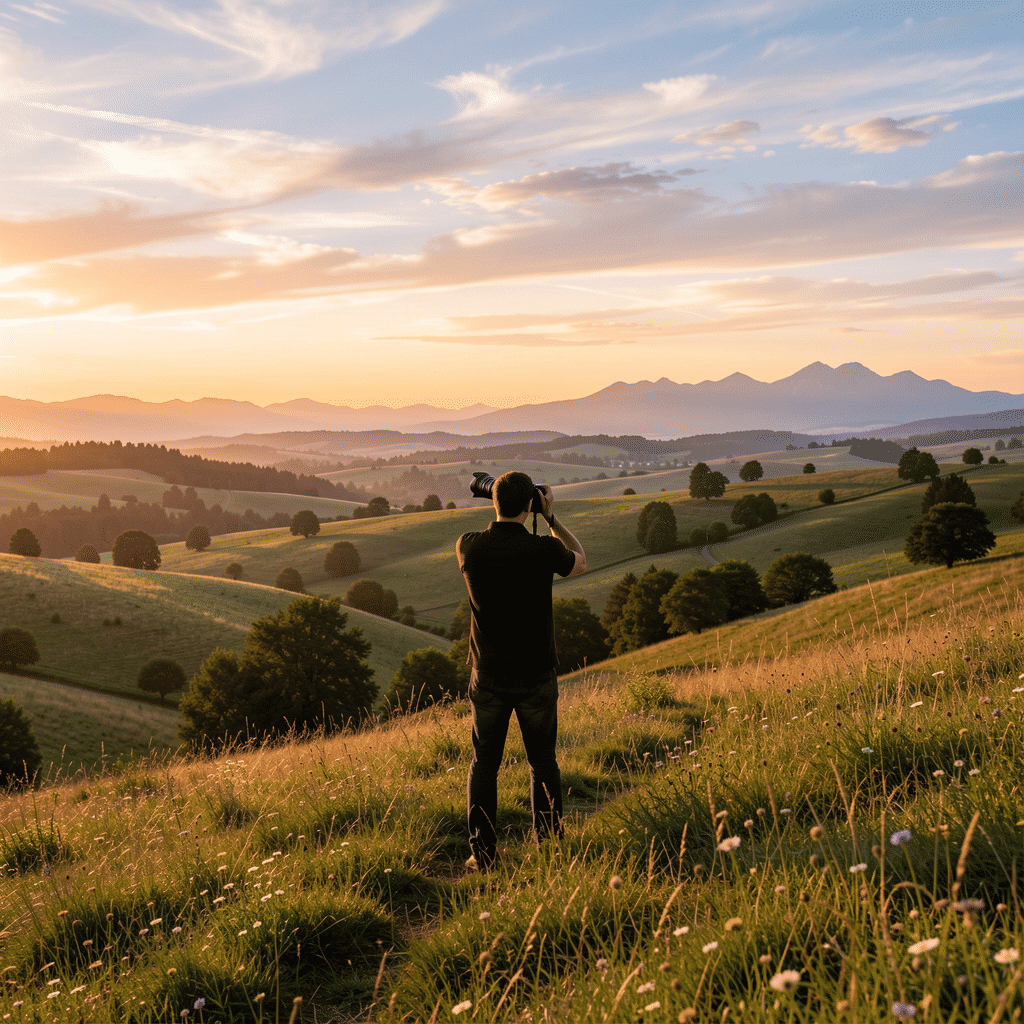
Exploring and mastering various photography techniques can significantly enhance your skills and bring a new level of creativity to your work. Whether you're an amateur or a seasoned photographer, these techniques will allow you to express your artistic vision and capture stunning images.
Understanding Light
Light is a fundamental element in photography, and learning how to manipulate it can transform your work. Natural light provides a soft, warm glow during the golden hour, shortly after sunrise or before sunset. Experiment with backlighting, which can create silhouettes or rim lighting effects, adding depth and mood to your photos. Indoors, you can use softbox lighting to mimic the natural effect.
Mastering Composition
Composition is the art of arranging elements within your frame. The rule of thirds is a basic but powerful tool that involves dividing your frame into nine equal parts and placing the subject along the gridlines. Leading lines guide the viewer's eyes through the photo, adding dynamic energy. Keep an eye out for patterns and symmetry, which can create visually pleasing compositions that capture attention.
Exploring Depth of Field
Depth of field refers to the area in focus within your image. A shallow depth of field can isolate your subject, blurring the background and drawing focus. This is achieved with a wide aperture (small f-number). Conversely, a narrow aperture (large f-number) keeps more of the scene in focus, which is ideal for landscapes.
Embracing Long Exposure
Long exposure photography is a captivating technique that involves using slow shutter speeds to capture movement. This method is perfect for capturing flowing water, moving clouds, or star trails. A tripod is essential for long exposure shots to keep the camera steady and ensure clarity.
Capturing Motion
Freezing or depicting motion can bring an image to life. To capture motion, use fast shutter speeds that freeze the action, perfect for sports or wildlife photography. Panning is a technique that combines motion blur with a sharp subject, creating a sense of speed and dynamism.
Experimenting with Perspectives
Changing your perspective can offer a fresh view of the world. Shooting from low angles can make subjects appear larger and more dramatic, while high angles can provide a bird's eye view. Try unusual angles or reflections to challenge the viewer’s perception and add intrigue to your compositions.
Enhancing Post-Processing
Post-processing is your opportunity to refine and enhance images. Software tools allow you to adjust exposure, contrast, and saturation, bringing out details and color in your work. Be mindful to maintain a natural look that enhances rather than overwhelms the photo.
Practicing Patience and Timing
In photography, capturing the perfect moment sometimes requires patience. Whether waiting for the right light, a subject’s expression, or an event to unfold, timing is crucial. Anticipate the action and be ready with your camera settings to seize the moment when it arrives.
Continuously applying and playing with these techniques can vastly improve your photography skills. Practice routinely, experiment boldly, and let your creativity shine through every shot. Remember, photography is as much about exploring the world around you as it is about discovering your unique artistic voice.